
Stage 1 Drought: Outdoor Watering and Landscaping
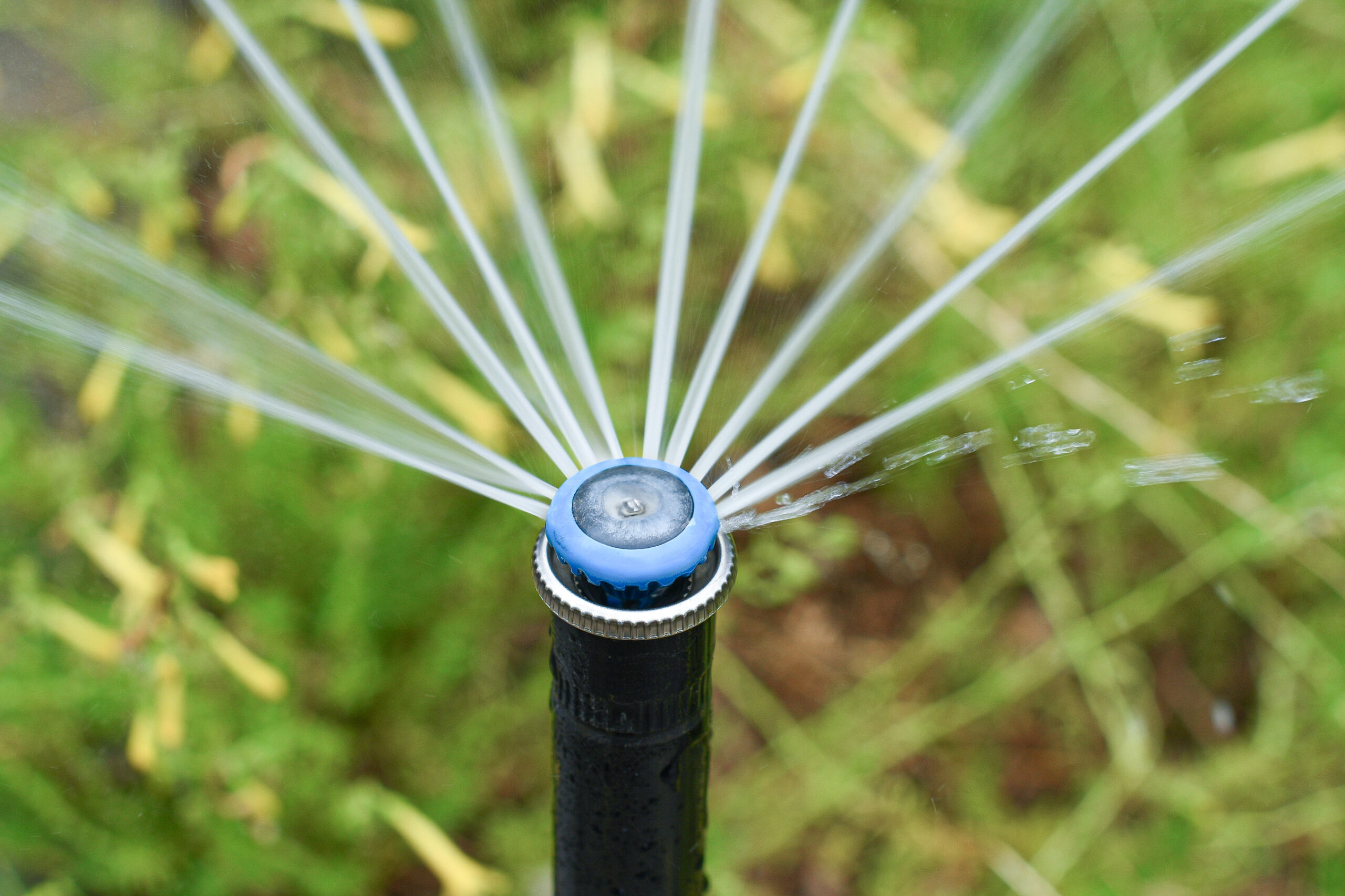
With spring days getting longer and temperatures on the rise, it’s tempting to turn on the sprinklers. However, as of March 15, 2026, in an effort to manage water supply during drought, Thornton enacted Stage 1 Drought restrictions, limiting outdoor water use and requiring customers to wait until May 1 to water with their sprinkler systems.
Water use restrictions don’t automatically mean that your lawn and garden will run dry this summer— a more thoughtful approach to watering can help support the community’s water supply while still protecting your landscape’s health. Small changes in watering methods can help you keep trees, shrubs, and gardens healthy and can make a meaningful difference in conserving water. Here are a few practical tips to help your yard and garden thrive while using water wisely.
What Customers Need to Know about Stage 1 Drought
Under Stage 1 Drought restrictions, lawn watering is limited to:
- Beginning no earlier than May 1, 2026.
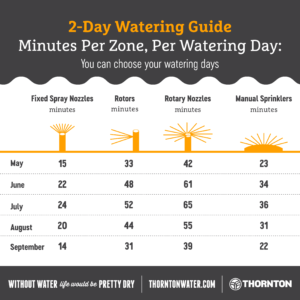
- No more than two days per week, following the Thornton Watering Guide. You can choose your watering days.
- Only between 6 p.m. and 10 a.m.
You can continue to water your trees, shrubs, vegetable gardens, and other perennial and annual plants as needed.
These guidelines are designed to preserve the Thornton community’s water and increase drought tolerance of turf while supporting the overall goal to decrease water demand by 10%. To make watering as efficient as possible and reduce water lost to evaporation, don’t water during the heat of the day. Watering during cooler hours allows moisture to soak into the soil rather than evaporate. Read the official Thornton Stage 1 Drought Rules and Regulations for more information. Find additional guidance on topics like car washing and how large properties over one acre can apply for a reduced water budget it they can’t water within the two-day window.
Wait to Turn on Sprinklers
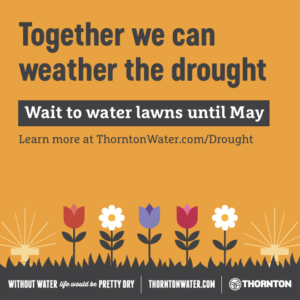
With the early arrival of warmer temperatures, it’s understandable to feel like your lawn is thirsty. However, even in dry seasons, consistently watering turf is not necessary until May. In early spring, established plants and grass are still coming out of dormancy and require less water than they do later in the season. Watering your lawn too soon can encourage shallow root growth, making lawns more vulnerable as temperatures continue to rise.
Waiting to water until at least May 1 (or later) supports deeper, more resilient root systems, and helps conserve limited water supplies. During drought, when it’s hot and dry, watering in March and April can negatively impact Thornton’s summer water supply by extending the watering season from the traditional six months to eight months.
If you are concerned about your plants’ health as conditions remain especially dry, consider checking soil moisture before watering rather than relying on temperature alone. In many cases, the soil still holds enough moisture to support early spring growth. Learn more about how to determine your soil moisture from CSU Extension. Hand watering of dry areas is allowed, if needed.
Water Two Days Per Week
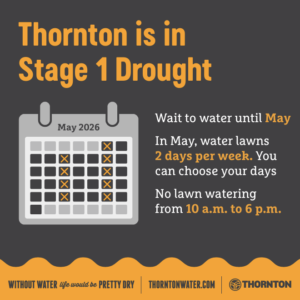
During Stage 1 Drought, all customers are asked to limit lawn watering to no more than two days per week. At this time, you can choose your two watering days. During normal years, Thornton has permanent rules that limit outdoor watering to no more than three days per week. However, simple changes in your watering methods can help your lawn soak up every last drop of water and tolerate dry spells while lowering your water usage at the same time. Watering two days a week will also force your lawn roots deeper into the soil, increasing your lawn’s drought tolerance over time.
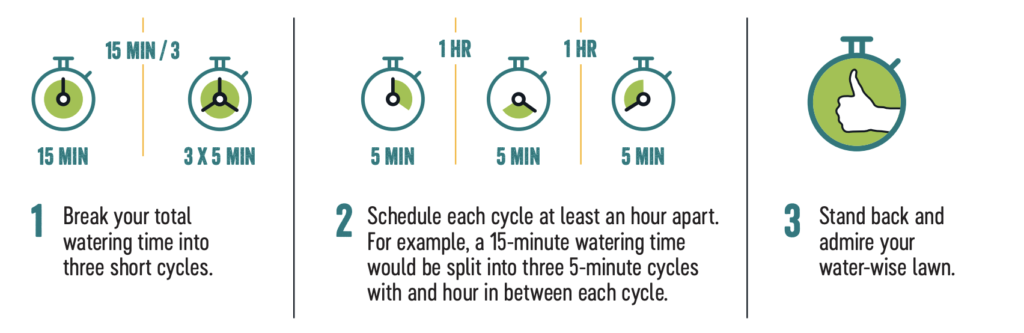
Using the cycle and soak method, customers can run their sprinklers for less time, breaking watering into three shorter cycles at least one hour apart. For example, a yard using fixed nozzles may water their lawn for up to 15 minutes on their watering day in May. However, using the cycle and soak method, the customer can water their lawn for five minutes at a time three separate times, for a total of 15 minutes. This style of watering lets roots soak up as much water as possible, rather than simply saturating the ground or causing runoff. Access the current outdoor watering guide here, or learn more about the cycle and soak method here.
Programming Your Sprinklers
Before turning on your sprinklers, check your system for leaks, misaligned heads or other inefficiencies. Use our Finding and Fixing Leaks Checklist to fully evaluate your system before you get started.
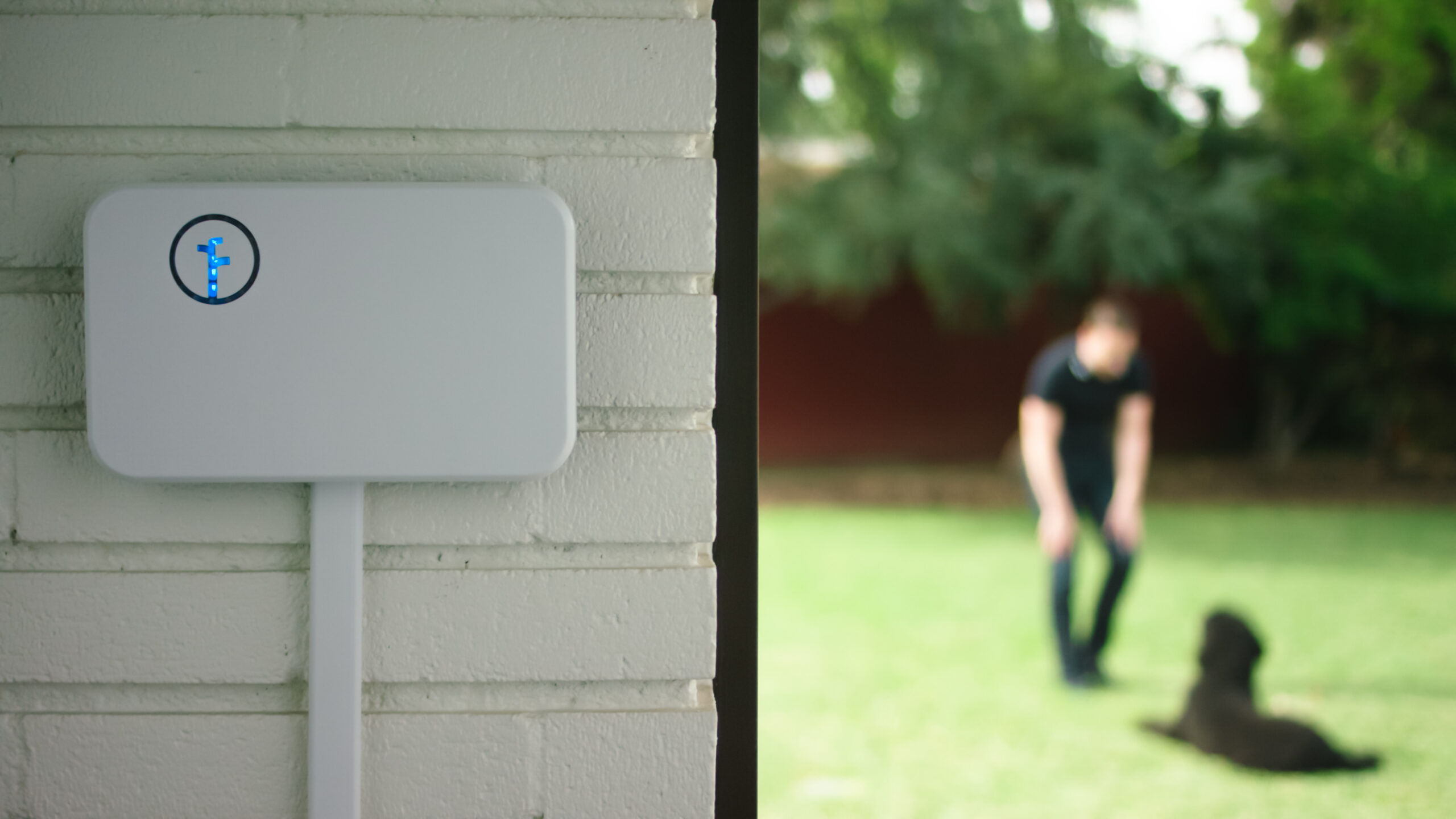
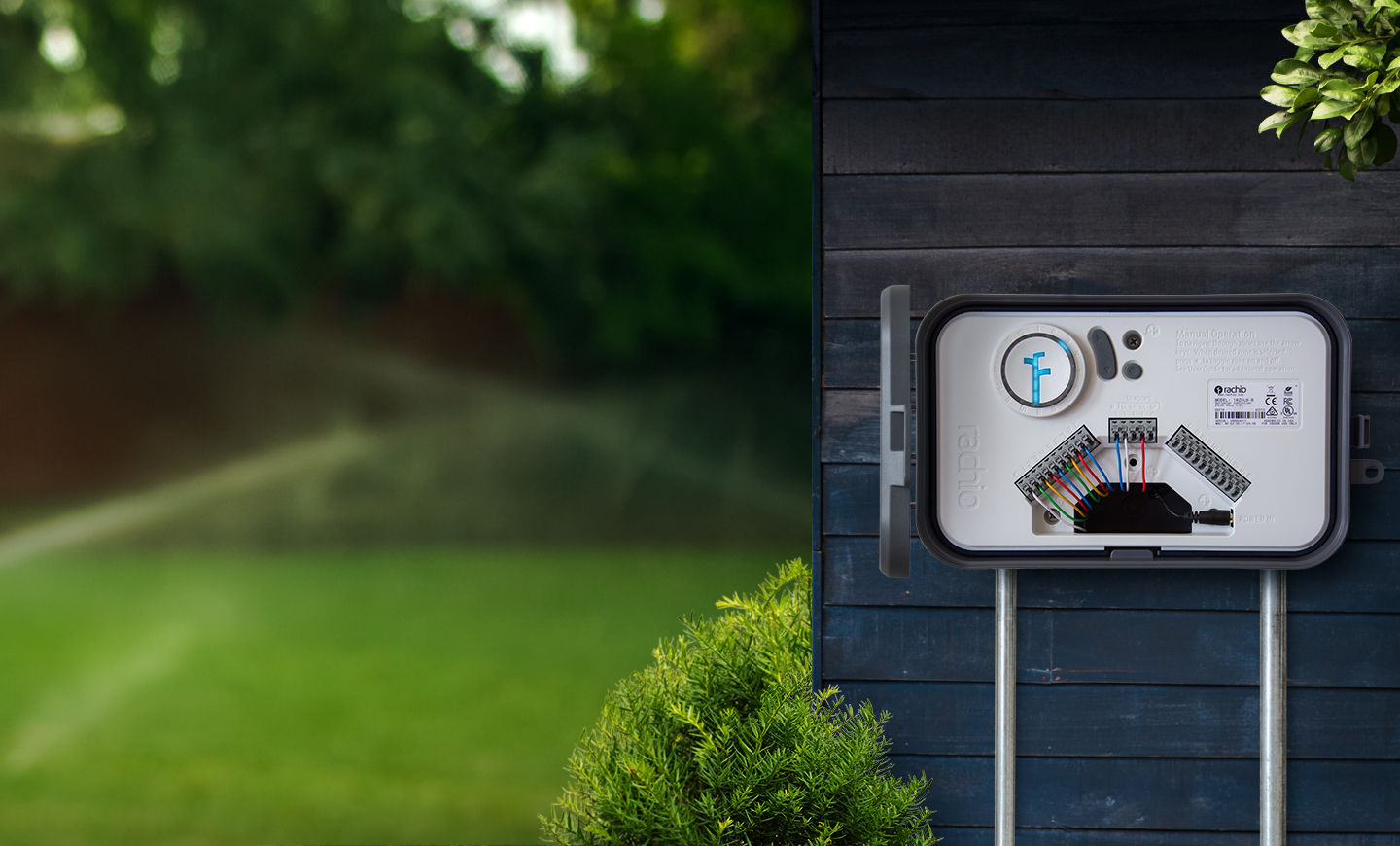
Most controllers have three programs (A, B, C). The programs control when and how long each zone is watered. Each program has a start time (when watering will begin) and zone run times. Individual zones can be turned on or off in each program. For example, you might run your lawn zones two days per week on Program A, and your vegetable garden daily or every other day on Program B.
If you are using an old controller, we recommend upgrading to a weather-based, WiFi-enabled irrigation controller for easy management right from your phone or tablet or installing a rain sensor to reduce irrigation automatically when it rains. Residential Thornton Water customers can receive a rebate of up to $200 for installing a WaterSense-certified irrigation controller.
Check out our Hidden Water Waste DeMistified video, read through our Irrigation Controllers DeMISTified Fact Sheet or look up video for your specific irrigation controller for more information on programming your controller and identifying water waste.
Get Help With Your Sprinkler System
Not a DIY person? Take advantage of free Slow the Flow sprinkler evaluations offered through our partners at Resource Central.
These consultations provide personalized recommendations to help reduce water waste, improve system performance and ensure landscapes receive the right amount of water. Appointments are available on a first-come, first-served basis during the irrigation season, typically June through August. You will also receive a custom watering schedule designed to follow Thornton’s water restrictions and keep your landscape healthy.
Caring for Trees, Shrubs and Gardens
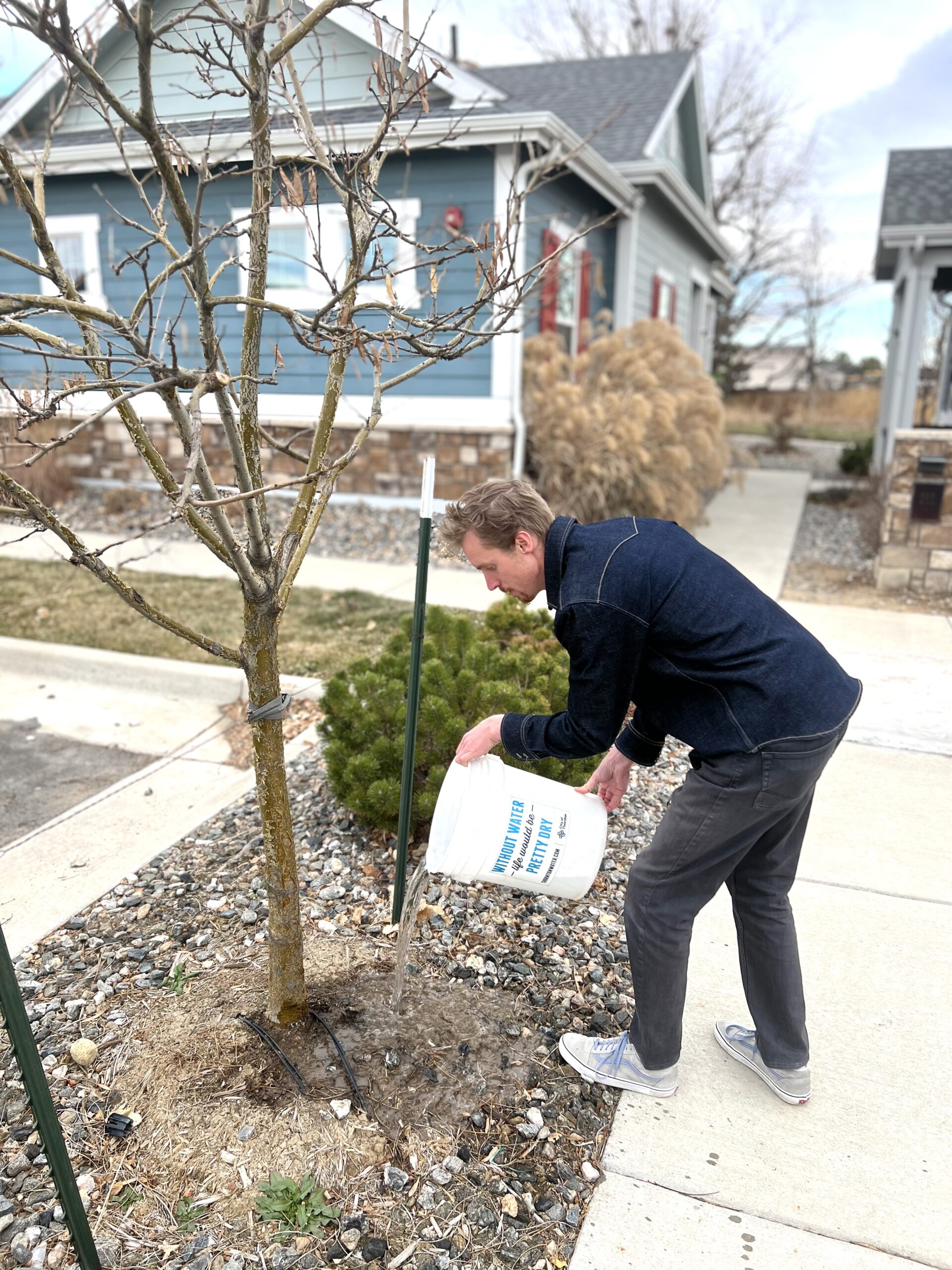
While lawns are typically strong enough to wait until May before watering, trees, shrubs, and gardens may require occasional attention during dry periods. Giving your trees some extra love can help prevent root damage and protect their long-term health. Young trees (less than two years old) and shrubs benefit from infrequent but deep watering, which encourages roots to grow deeper into the soil and improves resilience during future dry seasons.
- Water by hand approximately once every three weeks during dry spells without significant precipitation.
- Water trees near the edge of the tree canopy at the drip line to reach young, soft roots. Give your trees eight to ten gallons of water for each inch of the tree’s diameter.
- Apply water slowly to help roots absorb water and prevent runoff.
- Consider checking the soil moisture before adding additional water to your trees.
- Read the city of Thornton Forestry tree watering guide for more tree care tips and tricks.
For perennial gardens, hand watering in the early part of the season may boost plant health. Monitor your plants and soil moisture and adjust based on weather conditions to help prevent both under- and over-watering.
Water-Wise Gardening Tips
Maintaining a beautiful garden is still possible during drought by planting Water-Wise varieties of annuals and perennials and adding amendments to supercharge your soil.
The Magic of Mulch
Adding a layer of material on the surface of your soil, otherwise known as mulch, around trees, shrubs, and garden beds helps retain soil moisture, regulate temperature and reduce evaporation. Mulch comes in many different forms, most commonly as an organic layer made of woodchips, bark, and other plant materials. Mulch helps your garden retain moisture and adds nutrients back into the soil as it decomposes. Learn more about how to maximize your mulch benefits on our H2Overhaul mulch page.
Compost: From Scraps to Super-Soil
Compost is another common natural soil amendment produced when organic materials, such as food scraps or yard waste, break down in an oxygen-rich environment. Similar to mulch, compost acts as a super-food for your soil, adding nutrients from decomposing organic materials in a form that your plants can easily use. Adding compost to your topsoil and garden beds before planting can help boost water retention and improve overall soil structure, without using synthetic fertilizers or fillers.
Switch to Drip
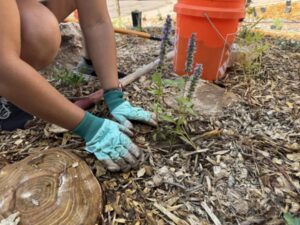
Drip emitters slowly release water directly to the base of plants, allowing it to soak in slowly while cutting back on runoff, evaporation, or wind exposure. According to the CSU Extension office, when properly programmed, drip irrigation can increase watering efficiency from the 50-70% seen in sprinklers to over 90%. This low-volume water application helps maintain a more desirable balance of air and water in the soil to foster stronger, healthier plants. Read more about the benefits of drip irrigation from CSU Extension.
Working Together to Conserve Water
By waiting to water, following Stage 1 Drought guidelines, and making small changes to your yard care routine, you can help conserve water while still supporting Thornton’s outdoor spaces. Thornton customers play a key role in protecting our shared water resources, and every drop saved contributes to long-term sustainability.
For updates on drought conditions in Thornton, current rules and restrictions, and more information on how Thornton prepares for drought conditions, visit the Restrictions and Drought page and the Drought Conditions Blog. To learn more about how to be more water-wise in your landscape, visit the Saving Outdoors page.
Questions? Contact us at Water@ThorntonWater.com or 720-977-6600. For questions about your bill, visit goCOT.net/utilitybilling, contact UtilBilling@thorntonco.gov or call 303-538-7370.